

Uber - Driver: Drive & Deliver
Uber Technologies, Inc.
When I look at Uber - Driver: Drive & Deliver, I see a work app rather than a simple companion to the passenger service. It is built for people who want to drive with Uber, deliver through Uber Eats and Postmates, or keep those possibilities together in one place. I would recommend it to someone who values flexible access to driving and delivery work, but I would not describe it as effortless income. The app can organize the work; it cannot remove the costs, traffic, waiting time, vehicle wear, or local requirements that shape whether the work is worthwhile.
The app belongs to the Business category and is developed by Uber Technologies, Inc. It is free to install, available for Everyone, and supports devices running Android 9 or later. Its current version is 4.557.10001. The service has been available since November 14, 2014, and its scale is clear from its average rating of 4.6 across around 5.5 million ratings, with more than 100 million installs. Those figures tell me that this is a mature, widely used tool, although popularity alone should not be confused with a guarantee that driving or delivery will suit every city, vehicle, or schedule.
What I would check before choosing a driver and delivery app
My first decision criterion would be the kind of work I actually want. Driving passengers and delivering meals are related, but they do not feel identical during a shift. Passenger trips can mean more direct interaction and a different rhythm between requests. Delivery work may suit someone who prefers fewer conversations, but it can involve restaurant waits, parking problems, apartment access, and carrying orders. Having both areas associated with the same driver app is useful when I want to consider more than one way to work, but it does not make the two jobs interchangeable.
Related News

The second criterion is control over my time. I would ask myself whether I need a tool for occasional availability, a regular part-time routine, or a primary source of work. A flexible app is most attractive when my schedule changes from week to week. It is less convincing if I need a predictable wage, guaranteed hours, or a fixed route. The ability to open an app and look for work is not the same as knowing how much useful work will be available when I am ready.
I would also consider the practical conditions around my vehicle. Fuel, charging, maintenance, insurance, cleaning, depreciation, and unpaid travel between jobs all affect the real result. A delivery or passenger app can show the work opportunity, but I still have to judge whether a particular shift makes sense after those expenses. This is one of the most important differences between the attractive simplicity of the interface and the more complicated reality of working on the road.
Related News

Why WhatsApp Messenger Still Makes Everyday Communication Feel Easy

Jurassic World: The Game Is the Better Dino Tycoon for Strategic Players

Threads in Real Life: Who Should Join, Lurk, or Leave

How SHEIN Turned Shopping Into an Endless Content Feed

How to Make Fortnite Feel Smarter on Mobile

Should You Switch to Microsoft Outlook on Mobile?
Finally, I would compare how much switching I am willing to do. If I already use another driving or courier platform, moving to this one may require learning a new workflow, adjusting my preferred service area, and changing how I track earnings and expenses. If I am starting from nothing, the decision is simpler: I can evaluate one app without abandoning an established routine. For an experienced driver, the question is not merely whether Uber offers work, but whether its particular combination of passenger and delivery opportunities improves the hours already available elsewhere.
How the app fits into an ordinary working day
A realistic use case would be someone with a changing weekly schedule who has a few free hours after another job. Before leaving home, I would decide whether I wanted to focus on passenger driving, delivery, or simply see which option matched my plans. During the shift, I would use the app as the central place for accepting work and following the current task. At the end, I would review the day with my own notes, because an app view of activity is not a substitute for tracking fuel, maintenance, taxes, and time spent waiting.
That last point is a practical habit I strongly recommend. I would record the start and finish time, distance driven, fuel or charging cost, and any unusual delay. After several shifts, those notes can reveal whether a short session is genuinely productive or whether too much time disappears between requests. This is a more useful way to judge the app than relying on a single busy evening. It also prevents me from treating the most visible amount in the app as the same thing as take-home income.
Gallery
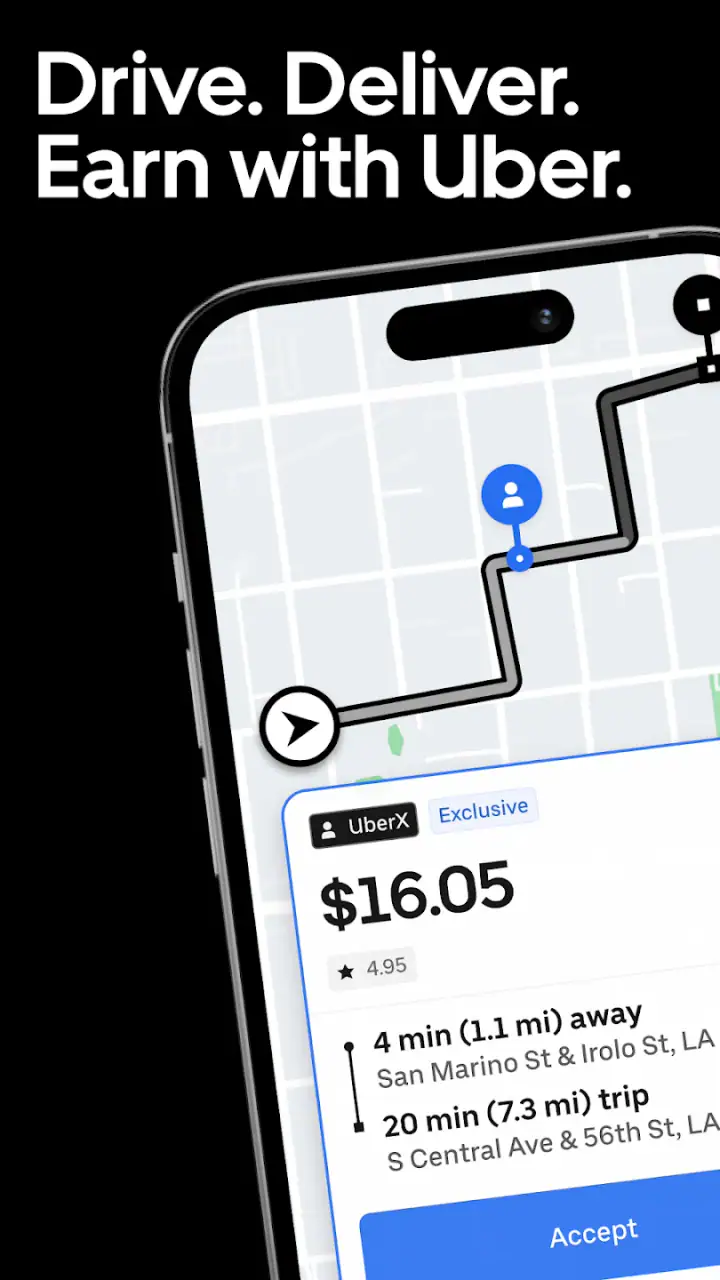
Another useful workflow is separating availability from commitment. I would not plan a full day around the assumption that every hour will be equally active. Instead, I would begin with a limited window, learn how the work fits my area and vehicle, and then expand only if the routine remains comfortable. This approach matters especially for new drivers, because the first few sessions involve learning pickup locations, drop-off patterns, parking choices, and how much concentration the work requires.
Where this app is especially convincing
The strongest part of this app is its breadth. A person interested in both ride driving and food delivery does not have to think about two completely unrelated brands when deciding how to use spare time. That makes the app appealing to someone whose preferences change during the week. I may be comfortable with passengers on one day and prefer deliveries on another, so having those work paths connected can reduce the friction of trying different routines.
It is also a sensible starting point for someone who wants a familiar, established platform rather than a small local service with a narrower footprint. The large user base and long presence in the market suggest that many people already recognize the Uber workflow. That does not guarantee equal opportunity everywhere, but it can make the learning curve feel less intimidating for a newcomer who has already used Uber as a customer.
I also like the app as a decision tool for testing flexibility. Someone who is not ready to commit to a conventional second job can explore whether driving or delivery fits around family responsibilities, study, or irregular employment. The free price removes one obvious barrier to trying the app. Still, “free” describes access to the software, not the cost of operating a vehicle or the personal time required to make the work pay.
A less obvious strength is the possibility of adapting the work to personal comfort. Some people may prefer passenger trips because they do not want to handle food or locate multiple entrances. Others may prefer delivery because they would rather avoid extended conversation. The app’s connection to both types of work gives the user a way to think about that trade-off instead of forcing a single identity from the beginning.
Small habits that make the experience more manageable
I would prepare the phone and vehicle before going online rather than solving basic problems during a request. A reliable mount, a charged phone, a clear place for delivery items, and a simple method for recording expenses can make the shift less stressful. These are not glamorous features, but they have a bigger effect on comfort than repeatedly checking whether the next request looks attractive.
I would also treat waiting as a cost in both time and attention. A restaurant delay, a difficult pickup entrance, or a passenger who needs extra assistance can change the value of a job. That does not mean every delay makes a request bad; it means I would judge the whole sequence rather than only the distance shown on screen. Keeping brief notes about recurring problem locations can help me decide whether a particular area is worth returning to.
For delivery work, I would be especially careful about organization. Keeping orders separated, checking the destination before leaving a pickup point, and allowing extra time for apartment buildings can prevent avoidable mistakes. For passenger work, I would focus on staying calm and maintaining attention while navigating. The app can guide the workflow, but good results still depend on habits outside the screen.
I would also protect time for reviewing the week, not just the shift. A single strong session can create an overly optimistic impression, while a single slow session can make the whole idea seem pointless. Looking at several sessions together gives me a better basis for deciding whether to continue, change the hours, or use the app only occasionally.
Where another option may fit better
The main limitation is that this app is not a complete answer for someone seeking stable employment. If I need a guaranteed schedule, predictable pay, employer-provided benefits, or a clear separation between work and personal vehicle use, a conventional job may be a better fit. The flexibility that attracts people to app-based work also shifts more responsibility onto the individual.
A local taxi or courier company may suit someone who prefers dispatch support, a defined service area, or a more traditional relationship with an employer. A specialized delivery service may be preferable for a person who wants to focus only on packages, meals, or business routes. I would not choose this app automatically just because it offers several forms of work; broader choice can be helpful, but it can also make the working day less focused.
Another platform may be better if it is more active in the specific neighborhood where I plan to work. Availability is highly local, and an app that is widely recognized can still be a poor match for a driver whose nearby demand is limited. I would compare real opportunities during the hours I can work rather than assuming that a large overall network guarantees useful requests near me.
There is also a personal preference question. If I dislike switching between passenger expectations and delivery logistics, a single-purpose app may feel easier to manage. If I want to build a repeat customer relationship or work through a small local business, a large platform may feel impersonal. Neither choice is universally right. The better option depends on whether I value reach and variety more than specialization and routine.
Privacy, safety, and stress should be part of the comparison too. Passenger driving involves direct contact with strangers, while delivery introduces different challenges around food handling, buildings, and parking. Someone uncomfortable with either environment should not assume that flexibility compensates for the discomfort. Trying a short session can reveal more than reading a long feature list, provided I approach it as an experiment rather than a promise of income.
The real cost of changing platforms
Switching to this app is easy at the software level because it is free to install, but the practical change can be larger. I would need to become comfortable with its request flow, understand how passenger and delivery tasks fit into my routine, and build my own method for measuring results. If I already use another platform, I would also have to decide whether the extra app adds useful work or merely divides my attention.
The cost of switching includes more than learning buttons. A different workflow can affect where I wait, how I plan fuel or charging, how I organize deliveries, and when I take breaks. It may take several sessions before I can judge the experience fairly. I would avoid making a decision based on the first hour, especially if that hour happens to be unusually busy or unusually quiet.
For someone new to this type of work, the transition may be less complicated, but the financial learning curve is still important. I would create a basic budget before starting: vehicle costs, phone use, cleaning supplies, food during shifts, and time spent traveling without a request. If the numbers only work when every minute is paid, the arrangement is probably too fragile. This is where an established app can appear more reassuring than it actually is; a polished interface cannot change the economics of the route.
I would also decide in advance when to stop. For example, I might test a few short sessions, review the results, and then choose whether to continue. Setting that boundary prevents me from spending weeks hoping that the next shift will explain an unclear pattern. The app is most useful when I treat it as one tool in a personal work plan, not as the plan itself.
Who should use it, and who should skip it?
I think this app is a strong match for an adult who wants to explore flexible driving or delivery, already has access to a suitable vehicle, and is willing to track the less visible costs. It is particularly appealing to someone who wants both passenger and food-delivery possibilities rather than being locked into one type of task. The Everyone age classification describes the app’s broad content suitability, but adults still need to consider the practical and legal requirements of doing the work in their area.
I would also recommend it to an existing Uber driver who wants to consider delivery as another way to use available hours. The benefit is not simply having another icon on the phone; it is having a broader way to think about when and how to work. That flexibility can be valuable when demand, weather, personal energy, or family plans change.
I would be cautious about recommending it to someone who needs immediate, dependable income or who has not calculated vehicle expenses. I would also suggest skipping it if driving in traffic causes significant stress, if passenger interaction is uncomfortable, or if delivery logistics sound frustrating. In those cases, a fixed workplace or a specialized role may provide a better balance even if it offers less freedom.
People with an older phone should check compatibility before planning around the app, since it requires Android 9 or later. More broadly, I would not choose it solely because the download is free or because its rating is high. Those details make it easy to try, but they do not answer the personal questions that matter most: Is there enough useful work nearby? Can my vehicle absorb the extra mileage? Do I enjoy this kind of day?
My recommendation after weighing the trade-offs
My recommendation is positive, with conditions. Uber - Driver: Drive & Deliver makes sense as a flexible entry point for passenger driving and delivery, especially for someone who wants to compare those routines without starting with separate services. Its strongest advantage is the range of work it puts within one driver-focused experience, backed by a mature product from Uber Technologies, Inc.
I would start cautiously rather than planning my finances around it. I would test a manageable schedule, keep accurate expense notes, compare passenger and delivery sessions honestly, and decide based on net value and personal comfort. I would also compare the results with local alternatives, because the best platform is the one that produces useful work during my available hours, not necessarily the one with the biggest name.
In short, this is a practical app for exploring flexible work, not a shortcut around the realities of driving and delivery. If I wanted variety, a recognizable platform, and the option to adjust between passengers and orders, I would give it a try. If I wanted stability, fixed earnings, or minimal vehicle responsibility, I would look elsewhere. That distinction is the key to using it well: the app can open a door, but I still have to decide whether what is behind it fits my time, budget, and everyday life.
FAQs for Uber - Driver: Drive & Deliver
What are the requirements to become an Uber driver?
To become an Uber driver, you must meet certain requirements: you need to be at least 21 years old, have a valid driver’s license, and possess a vehicle that meets Uber’s standards. Additionally, you’ll need to pass a background check and have at least one year of licensed driving experience. Specific requirements may vary by location.
How do drivers get paid with Uber?
Uber drivers are paid weekly through direct deposit. Payments are based on a combination of base fare, time, and distance traveled per trip. Drivers can also earn additional income through surge pricing and receiving tips via the app. Uber provides a detailed earnings breakdown in the app to help drivers track their income.
What is the rating system for Uber drivers?
Uber employs a rating system where passengers rate drivers on a scale of 1 to 5 stars after each trip. The average rating is calculated based on the most recent 500 ratings. Maintaining a high rating is crucial as consistently low ratings can lead to deactivation. Uber also encourages drivers to rate passengers.
Can drivers choose their working hours with Uber?
Yes, Uber offers flexibility to its drivers, allowing them to choose when they want to work. Drivers can log in to the app at any time to start accepting ride or delivery requests. This flexibility is one of the main attractions for drivers looking to balance work with personal commitments.
What support does Uber provide for drivers?
Uber provides various support resources for drivers, including an in-app help center, online support, and in-person assistance at Greenlight Hubs. These resources help drivers with issues ranging from app usage to account and payment inquiries. Uber also offers a 24/7 critical safety line for urgent safety-related concerns.
Pros
- Flexible working hours for drivers.
- User-friendly interface and navigation.
- Real-time earnings tracking feature.
- Multiple payment options available.
- 24/7 customer support for drivers.
Cons
- High commission rates can reduce earnings.
- Driver rating system can be stressful.
- Limited availability in rural areas.
- Surge pricing can deter customers.
- Requires constant internet connection.


